
China Exports TOP 5 OEM Massage Mattress: Which Models Should B2B Buyers Choose?
The top 5 China export OEM massage mattress categories are multifunctional seat massage cushions, full-body folding massage mattresses, car massage seat pads, local lumbar/back massage pads, and foldable airbag stretching massage mats. Each category fits different channels, price points, users, and compliance risks, so B2B buyers should match the model to their sales channel before placing orders.
China has a mature supply chain for home massage products.[^1] Still, not every “hot product” is right for every buyer. In my experience, the best purchasing decisions come from comparing target users, channel positioning, certifications, durability, packaging, and after-sales risk before confirming a model.
Which OEM massage mattress category is best for mass retail and online sales?
The multifunctional seat massage cushion is usually the strongest all-round OEM massage mattress category for mass retail and online sales. It combines familiar use scenes, clear visible functions, and flexible pricing. Buyers can position it as an office, home, car, or gift product, depending on features and packaging.
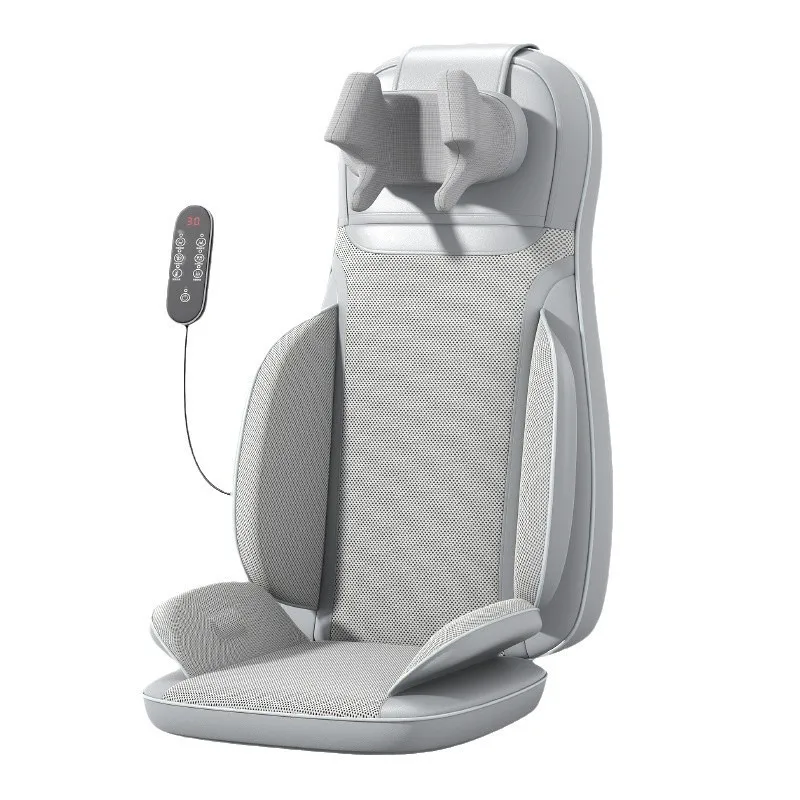
Why this category exports well
The seat-style massage cushion is one of the highest-volume massage products exported from China[^2]. I often describe it as the “entry door” for B2B buyers entering the home massage category because customers understand it quickly. They can place it on an office chair, sofa, or car seat without changing their living space.
Common configurations include:
- Shiatsu kneading massage for the neck, shoulders, or back
- 3D kneading nodes with moving back tracks
- Seat vibration for hip relaxation
- Heat therapy for the waist or back area
- Wired controller for simple operation
- PU leather and wear-resistant fabric for a retail look
- Dual power options for home adapter and 12V car use
In higher-end versions, buyers may request airbag shoulder clamping, tapping massage, or wider back coverage. In basic versions, suppliers may simplify the product to vibration plus heat. That low-cost structure works for promotional channels, but I usually advise buyers to check return-risk carefully before using it for long-term branded retail.
Best-fit buyers and channels
| Buyer Type | Suitable Version | Procurement Logic |
|---|---|---|
| Amazon or independent website seller | Mid to high function model | Better product pages, more feature differentiation |
| Supermarket or retail chain | Stable mid-range model | Clear function, acceptable warranty risk |
| Gift and promotion company | Basic or customized package model | Logo, color box, price control |
| Automotive distributor | Dual-use home/car version | 12V compatibility and seat fit |
| Health store chain | Shiatsu + heat model | Higher perceived value |
Key procurement checks
For Europe, I tell buyers to verify CE, RoHS, and REACH documents with the supplier and confirm whether the reports match the exact model and components. For the United States, buyers should check FCC-related requirements for electronic products. For heating versions, electrical safety is especially important.
A basic checklist includes:
- Motor life test: I prefer factories that can show test data, often 300 hours or more for key motors.
- Heating temperature control: The product should include overheat protection.
- Massage head durability: Weak gears and low-cost motors are common failure points.
- Fabric abrasion resistance: PU leather can crack if the material grade is poor.
From my factory-side experience, this OEM massage mattress type works best when the buyer does not over-customize the first order. I usually recommend starting with proven tooling, then customizing logo, fabric color, remote-control label, instruction manual, and packaging after the sample test is stable.
Is a full-body folding OEM massage mattress right for higher-ticket channels?
A full-body folding OEM massage mattress is suitable for higher-ticket channels such as home SPA brands, wellness retailers, senior care channels, and independent websites. It offers broader body coverage, higher perceived value, and more functions, but buyers must pay close attention to air pressure systems, wiring, folding durability, and shipping protection.
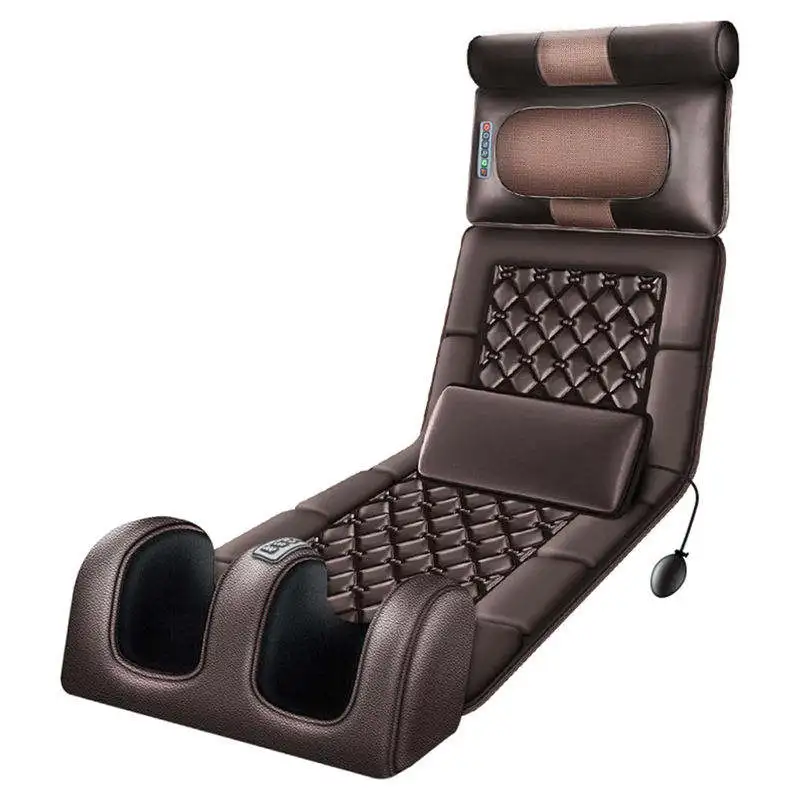
What defines this product type
A full-body folding massage mattress usually covers the neck, shoulders, back, waist, hips, legs, and calves. It can be placed on a bed, carpet, or flat floor. Many designs fold into a smaller size for storage, which is useful for overseas households with limited space.
Common functions include:
- Back moving kneading mechanism
- Full-body multi-point vibration
- Leg airbag compression
- Far-infrared or standard heat therapy
- Timer with automatic shut-off
- Foldable storage design
This type usually has a higher selling price than a seat cushion. That makes it attractive for buyers who operate independent websites, wellness brands, home SPA collections, or senior care product lines.
Market fit by region
| Region | Common Preference | Buyer Note |
|---|---|---|
| Europe | Quiet operation, eco-friendly fabrics, safe heating | Verify REACH and material claims |
| North America | More functions, strong heat, full-body coverage | Product page must explain benefits clearly |
| South America | Balanced price and visible functions | Packaging strength matters for long logistics |
| Southeast Asia | Portable and cost-effective models | Avoid oversized cartons if freight is sensitive |
| Senior care channels | Gentle force and easy control | Avoid medical claims unless reviewed locally |
Quality risks buyers should not ignore
The full-body OEM massage mattress is more complex than a simple pad. It may contain motors, heating wires, airbags, tubes, controllers, and folding connection points. I have seen buyers focus on product photos but forget to test the folding area. That area often carries hidden stress during transport and daily use.
Important test items include:
- Airbag leakage test for compression versions
- Folding life test for repeated opening and closing
- Wire bending test near hinge areas
- Heat uniformity test across back or waist areas
- Noise level check during night-time use scenarios
- Carton compression test for sea freight and warehouse stacking
Packaging also deserves serious attention. Folding massage mattresses should use thicker EPE foam, corner protection, and stable internal positioning. A beautiful product can still fail commercially if internal wires are damaged by long-distance compression.
Compliance and marketing caution
Buyers should be careful with product claims. Words like “therapy,” “rehabilitation,” or “medical treatment” can create regulatory issues in some countries. A product may be suitable for relaxation and comfort, but medical claims may require additional review by qualified professionals or local regulatory consultants[^3].
For OEM/ODM projects, I suggest preparing:
- Multilingual manuals
- Local plug options
- Safety warning labels
- Retail box artwork
- Spare controller plan
- After-sales part supply schedule
This product category can produce strong margin, but it is not ideal for careless low-price sourcing. Buyers should request samples, test them with real target users, and verify documentation before bulk production.
Why do car buyers choose a dedicated OEM massage mattress for vehicles?
A dedicated car OEM massage mattress or car massage seat pad is designed around 12V vehicle power, lumbar comfort, and compact structure. It is best for automotive accessory importers, 4S dealer gifts, truck driver products, and car care retail chains.
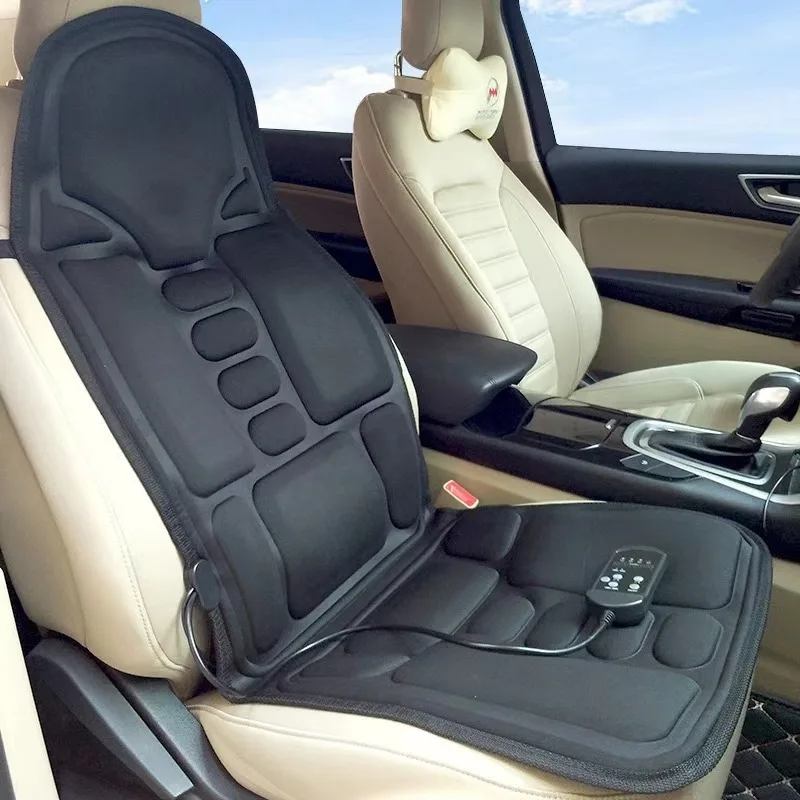
How it differs from home models
A car massage seat pad is usually simpler than a full home massage cushion. It focuses on the waist, lower back, and seat area. Many versions use vibration massage, heat therapy, or simple kneading. The product should not be bulky because it must fit inside a real vehicle seat.
Typical features include:
- 12V car power input
- Lumbar support structure
- Vibration or light kneading massage
- Waist heat function
- Anti-slip backing
- Elastic straps or seat fixing bands
- Compact design to avoid interfering with driving posture
I often see buyers request strong massage functions for car products. However, stronger is not always better in a vehicle environment. A product used while driving should be stable, low-risk, and easy to operate. Buyers should also consider whether local rules restrict driver-use massage products.
Best channels for car massage seat pads
| Channel | Product Positioning | Buyer Priority |
|---|---|---|
| Auto parts importer | Practical driving comfort | 12V safety and durable fabric |
| Car 4S dealer gift | Branded promotional gift | Logo and gift packaging |
| Truck driver channel | Long-drive waist support | Heat, lumbar shape, simple buttons |
| Automotive retail chain | Affordable impulse purchase | Stable price and easy display |
| E-commerce bundle seller | Car comfort set | Combine with lumbar pillow or car aromatherapy |
Procurement risks in automotive use
The car environment is harder than many buyers expect. Seats experience heat, friction, vibration, dust, and long sun exposure. In hot regions, the inside of a parked car can reach very high temperatures[^4]. Low-grade PU materials may age fast, smell strong, or crack.
Key checks include:
-
12V adapter stability
The product must match car voltage requirements. Buyers should confirm whether the cable, plug, and fuse design meet their market expectations. -
E-mark documentation for vehicle power accessories[^5]
For European automotive channels, buyers should ask whether the car power cable has suitable E-mark documentation where required. -
Side airbag safety warning
In Europe especially, the product should not block side airbags[^6]. Manuals and packaging should include clear safety reminders. -
Heat resistance of materials
The fabric, foam, wires, and plastic parts should be tested under realistic temperature conditions. -
Anti-slip and fixing performance
A sliding seat pad creates poor user experience and possible safety concerns.
My sourcing view
I see car massage pads as a strong niche, but I do not treat them as the same product as a home OEM massage mattress. The sales channel is different. The end user is different. The safety language is different.
For new buyers, I recommend starting with a simple, robust, low-voltage model instead of a complicated luxury version. Automotive buyers care about reliability and fit. If the product is used as a dealer gift, the packaging and logo placement may matter more than adding one more massage mode.
When should buyers choose a basic style lumbar/back OEM massage mattress?
A basic style lumbar or back OEM massage mattress is best for office wellness, corporate gifts, gaming chair accessories, pharmacy retail, and small-batch test orders. It usually combines ergonomic support with air pressure, vibration, or heat, making it easier to store, ship, and sell through focused channels.
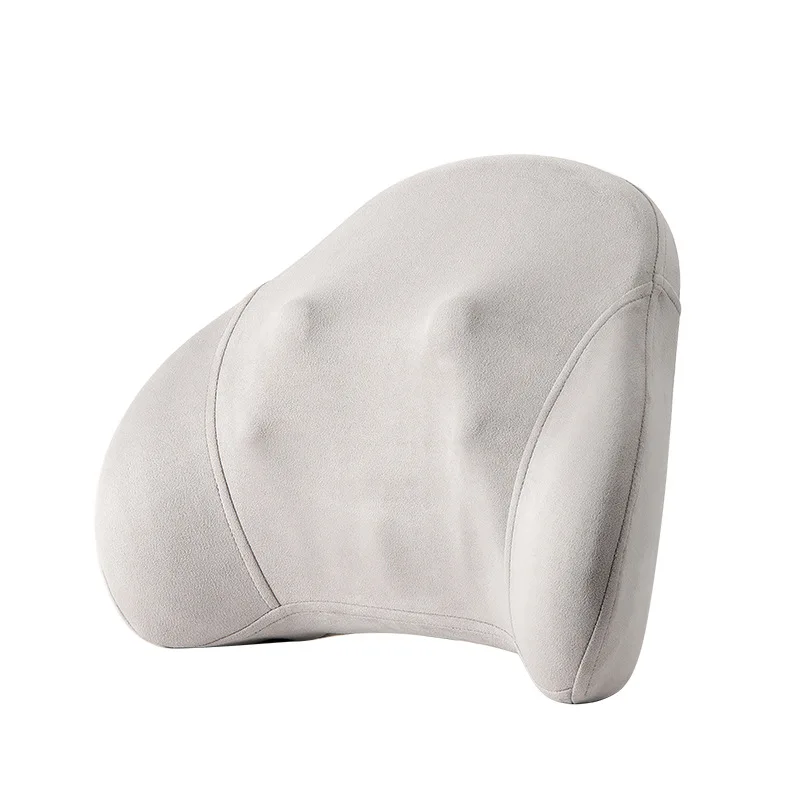
Product profile
This product is more like a compact massage support pad than a full mattress. It sits around the waist or back area on an office chair, gaming chair, sofa, or car seat. Many versions use USB power, a low-voltage adapter, or a rechargeable battery depending on design.
Common configurations include:
- Lumbar airbag pressure
- Local heat function
- Vibration massage
- Ergonomic curved support
- Breathable mesh fabric
- USB or adapter power
- Removable and washable cover options
The key sales message is not “full-body massage.” The message is daily lumbar comfort for people who sit for long periods.
Why this product works for B2B test orders
This category is practical for buyers who want to enter the massage market without committing to large, expensive inventory. Cartons are smaller. Shipping cost per unit is lower. Sample evaluation is faster. Retail display is easier.
I often suggest this category to buyers who sell:
- Office wellness products
- Corporate employee benefits
- Gaming accessories
- Pharmacy and rehabilitation support products
- Home office equipment
- Promotional gifts for health campaigns
Comparison with larger massage products
| Factor | Lumbar/Back Pad | Seat Massage Cushion | Full-Body Folding Mat |
|---|---|---|---|
| Unit price | Lower | Medium | Higher |
| Carton size | Small | Medium | Large |
| Feature complexity | Low to medium | Medium | High |
| Best channel | Office and gift | Retail and e-commerce | Wellness and senior care |
| Return risk | Lower if simple | Medium | Higher if poorly packed |
| Customization space | Fabric, logo, cover | Logo, function, package | Design, mode, material |
Procurement points
For USB low-voltage products, buyers should check short-circuit protection and cable durability. A cheap USB cable can create more after-sales problems than the massage pad itself. If the product uses a rechargeable battery, buyers should confirm transport requirements and battery documentation.
Fabric selection is also important. Long sitting creates heat and sweat, so breathable mesh can perform better than low-grade PU for office users. For European buyers, a minimalist appearance often works well. Black, grey, beige, and Nordic-style colors usually feel more premium than shiny or overly decorative materials.
Buyers should also confirm accessory availability. Spare covers, controllers, cables, and adapters may be needed for after-sales service. I like to ask suppliers one simple question:
“If I reorder only spare covers or controllers after six months, can you still supply the same version?”
That answer shows whether the factory has stable material control. A small local OEM massage mattress can be a smart first step, but only if the supplier can support repeat orders with consistent materials.
Why is a foldable airbag stretching OEM massage mattress growing fast?
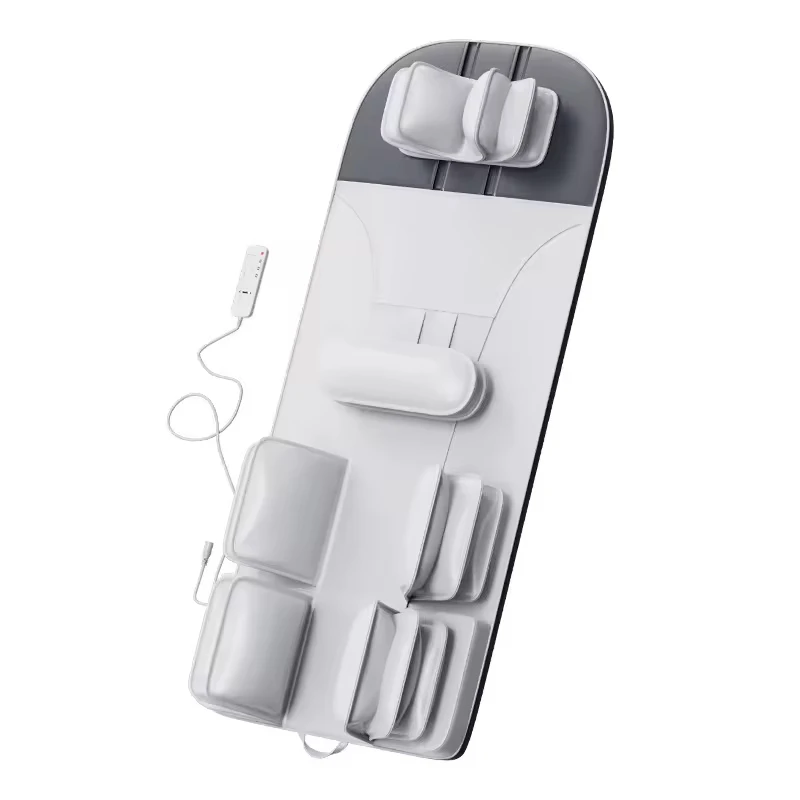
A foldable airbag stretching OEM massage mattress uses air inflation and deflation to create gentle stretching and compression. It has fewer hard mechanisms, a smaller folded size, and a softer user experience. It is especially suitable for senior care, wellness gifts, home relaxation brands, and consumers sensitive to strong kneading massage.
Product concept
This category uses airbags as the main working system. Instead of hard massage nodes pressing into the body, airbags inflate and deflate in programmed sequences. The result is a softer stretching or compression feeling.
Common features include:
- Multi-zone airbag stretching
- Independent zone control
- Gentle back, waist, hip, or leg pressure
- Automatic preset programs
- Foldable storage structure
- Lightweight body design
- Soft fabric surface
- Timer and safety shut-off
This product is not designed for users who want very strong deep-kneading massage. It is better for customers who prefer gentle relaxation, light stretching, and low-impact comfort.
Why the market is expanding
Global interest in home wellness continues to grow because of long sitting, aging populations, and demand for convenient relaxation products. Many industry reports estimate the global massage and wellness device market to grow at around 7% to 8.7% CAGR, depending on category definition and region. I treat these numbers as directional, not as a guarantee, but they match what I see in buyer inquiries.
The airbag stretching mat benefits from several trends:
-
Gentle home wellness Older users and sensitive users may dislike hard kneading mechanisms. Airbag stretching feels less aggressive.
-
Smaller home storage Foldable designs fit apartments and smaller homes better than large massage chairs or heavy mats.
-
Cross-border logistics Lighter, foldable products can help control freight cost compared with bulky massage beds.
-
Premium gift positioning A soft stretching mat can be packaged as a higher-end wellness gift.
-
Function differentiation Independent airbag zones and smart programs help brands avoid pure price competition.
B2B quality control focus
Airbag products have their own risks. The most important one is air tightness. A small leak can make the product feel weak after short use. The second risk is fabric abrasion at folding points. Repeated folding can damage the outer cover or internal tubing if the structure is not designed well.
Buyers should request testing for:
- Airbag pressure retention
- Tube connection strength
- Pump noise level
- Folding durability
- Seam strength
- Controller reliability
- Heat aging if heat is included
- Long-cycle inflation and deflation testing
Positioning advice
I would not sell this product with exaggerated medical wording. I would position it as a home relaxation and gentle stretching product. If a buyer wants to promote therapeutic or rehabilitation benefits, I recommend getting local professional and regulatory evaluation before launching.
For OEM/ODM customization, this category offers good space for brand differentiation:
- Fabric texture and color
- Folded carry design
- Program names
- Remote-control layout
- Gift box design
- Multilingual manual
- Private label branding
This OEM massage mattress category can protect margin better than basic vibration products because it feels different. However, buyers must sample-test the force level. If the pressure feels too soft for the target market, end customers may leave negative reviews saying “not powerful enough.”
What overall OEM massage mattress market trends should buyers watch?
The home wellness market is growing, but growth does not protect buyers from bad sourcing decisions. I see many importers lose money because they buy a product before defining their market. A trend is only useful when it matches the buyer’s channel, price range, and compliance ability.
The main OEM massage mattress trends are home wellness demand, higher compliance requirements, private-label customization, regional market segmentation, and stronger quality expectations. Buyers should verify certifications, avoid unsafe low-cost designs, and work with factories that can support testing, stable production, and after-sales parts.
Trend 1: Home wellness demand is becoming more practical
Consumers spend more time sitting at desks, driving, gaming, and working from home. Aging populations also increase demand for easy-to-use comfort products. This supports steady interest in massage cushions, folding mats, airbag products, and lumbar support pads.
However, I do not advise buyers to treat every massage product as a guaranteed bestseller. A product must match a real use scene:
- Office sitting fatigue
- Senior home comfort
- Long-distance driving
- Gift wellness demand
- Home SPA relaxation
- Small-space storage
Trend 2: Compliance is no longer optional
Europe and the United States continue to raise expectations for electrical safety, chemical restrictions, labeling, and documentation. Buyers should not accept vague claims like “we have all certificates.” They should ask for documents and check whether the reports match:
- Exact model number
- Product components
- Plug type and adapter
- Heating system
- Power cable
- Factory name
- Test standard
- Valid date
Common documents may include CE, RoHS, REACH, FCC, and relevant adapter or cable approvals. Some buyers may also ask about UL-related safety expectations in the United States. Buyers should consult qualified compliance professionals for application-specific decisions.
Trend 3: OEM/ODM private label demand is becoming mainstream
More overseas buyers want their own brand instead of generic products. Customization often includes:
- Logo printing or embroidery
- Fabric color
- Button language
- Remote-control layout
- Retail box design
- Manual translation
- Function combination
- Bundle packaging
- Product video and photography support
At CHALKART, we usually see buyers start with an existing proven model, then customize appearance and packaging first. That approach controls risk better than opening a new mold too early.
Trend 4: Regional preferences differ
| Market | Preference | Suggested Product Direction |
|---|---|---|
| Europe | Quality, safety, eco materials, simple design | Seat cushion, lumbar pad, airbag stretching mat |
| North America | Multi-function, heat, strong perceived value | Full-body mat, seat cushion, car pad |
| South America | Practical function and fair price | Seat cushion, car pad, compact lumbar pad |
| Middle East | Gift value and visible functions | Seat cushion, car massage pad |
| Southeast Asia | Affordable and portable products | Basic cushion, compact pad |
Low price is attractive at the quotation stage. But I have seen low-cost products create higher costs later through returns, warranty claims, poor reviews, and customs problems. For long-term B2B cooperation, I prefer to evaluate total cost instead of unit price only.
Frequently Asked Questions
What is the best OEM massage mattress for new B2B buyers?
I usually suggest starting with a multifunctional seat massage cushion or a compact lumbar/back pad. These products have clearer use scenes, moderate prices, smaller procurement risk, and easier channel testing. Buyers can then expand into full-body folding mats or airbag stretching mats after validating demand.
What certifications should I check before importing massage mattresses from China?
For Europe, buyers commonly check CE, RoHS, and REACH. For the United States, FCC may apply to electronic products, and electrical safety expectations should be reviewed. Buyers should verify that certificates match the exact model, adapter, cable, heating system, and supplier details.
Are airbag stretching massage mats better than mechanical massage mats?
Airbag stretching mats are not automatically better. They are gentler, quieter, and often easier to fold, so they suit seniors and sensitive users. Mechanical mats may feel stronger and more familiar. Buyers should choose based on target users, sales claims, expected massage intensity, and return-risk tolerance.
Can I customize logo, color, packaging, and manuals for OEM orders?
Yes, most professional Chinese massage product factories can support logo, fabric color, packaging, instruction manuals, and sometimes function adjustments. I recommend starting with low-risk customization first. New molds or major structural changes should only begin after sample testing and cost confirmation.
Why do low-price massage mattress orders often create after-sales problems?
Very low-price products may use weaker motors, thin heating protection, low-grade fabric, poor wiring, or weak packaging. These issues can increase failure rates during retail use or long-distance shipping. Buyers should compare total cost, including returns and warranty support, not only factory unit price.
[^1]: "Trade of goods, US$, HS, 90 Optical, photographic ... - UN Data", https://data.un.org/Data.aspx?q=test&d=ComTrade&f=_l1Code%3A90%3BcmdCode%3A901910. Trade data on massage apparatus exports identifies China as a major exporting country in this product class, supporting the article’s characterization of a developed Chinese supply base for home massage products. Evidence role: general_support; source type: institution. Supports: A neutral trade or institutional source should show China’s significant role in producing or exporting massage apparatus or related household wellness appliances.. Scope note: Trade classifications may cover massage apparatus broadly and may not isolate massage mattresses specifically. [^2]: "Trade Statistics by Product (HS 6-digit)", https://wits.worldbank.org/trade/country-byhs6product.aspx?lang=en. Customs or international trade data showing large Chinese exports of massage apparatus would provide quantitative context for the claim that seat-style massage cushions belong to a high-volume export segment. Evidence role: statistic; source type: institution. Supports: A trade database or customs source should support the scale of Chinese massage apparatus exports and, if available, the relative prominence of seat-style massage cushions.. Scope note: Most public trade data are likely to aggregate several massage product formats under one classification, so the evidence may contextualize rather than directly rank seat cushions. [^3]: "General Wellness: Policy for Low Risk Devices - Guidance", https://www.fda.gov/regulatory-information/search-fda-guidance-documents/general-wellness-policy-low-risk-devices. Regulatory guidance from medical-device authorities states that intended use and promotional claims are central to device classification, supporting the caution that therapeutic or rehabilitation claims may require additional review. Evidence role: expert_consensus; source type: government. Supports: Regulatory guidance should support that claims about therapy, rehabilitation, or medical treatment can affect whether a product is treated as a medical device or requires regulatory review.. Scope note: Classification rules differ by jurisdiction and by the exact wording of the claim. [^4]: "Evaluating the impact of solar radiation on pediatric heat ...", https://pmc.ncbi.nlm.nih.gov/articles/PMC6204985/. Peer-reviewed studies of enclosed vehicles show that cabin temperatures can rise rapidly and substantially above ambient conditions when parked in sunlight, supporting the need to consider heat exposure for in-car accessories. Evidence role: statistic; source type: paper. Supports: A peer-reviewed study should quantify temperature rise inside parked vehicles under sun exposure.. Scope note: Measured temperatures vary with climate, vehicle type, ventilation, color, and duration of sun exposure. [^5]: "Agreement Addendum 9: Regulation No. 10", https://unece.org/fileadmin/DAM/trans/main/wp29/wp29regs/2015/R010r5e.pdf. UNECE Regulation No. 10 covers electromagnetic compatibility for vehicles and certain electrical or electronic subassemblies, providing regulatory context for E-mark documentation on vehicle power accessories. Evidence role: general_support; source type: institution. Supports: A UNECE or EU source should support that vehicle electrical or electronic components may be subject to automotive type-approval or electromagnetic compatibility requirements.. Scope note: Whether a specific massage seat-pad cable or adapter requires E-mark approval depends on its function, installation, and market interpretation. [^6]: "Vehicle Air Bags and Injury Prevention", https://www.nhtsa.gov/vehicle-safety/air-bags. Vehicle safety guidance notes that side airbags may deploy from the seat or side structure and that accessories covering deployment areas can interfere with proper operation, supporting the warning against blocking side airbags. Evidence role: mechanism; source type: government. Supports: A vehicle safety authority should explain that seat covers or accessories may interfere with side airbag deployment if they obstruct deployment zones.. Scope note: The relevance depends on the vehicle’s airbag location and the accessory’s design and placement.


